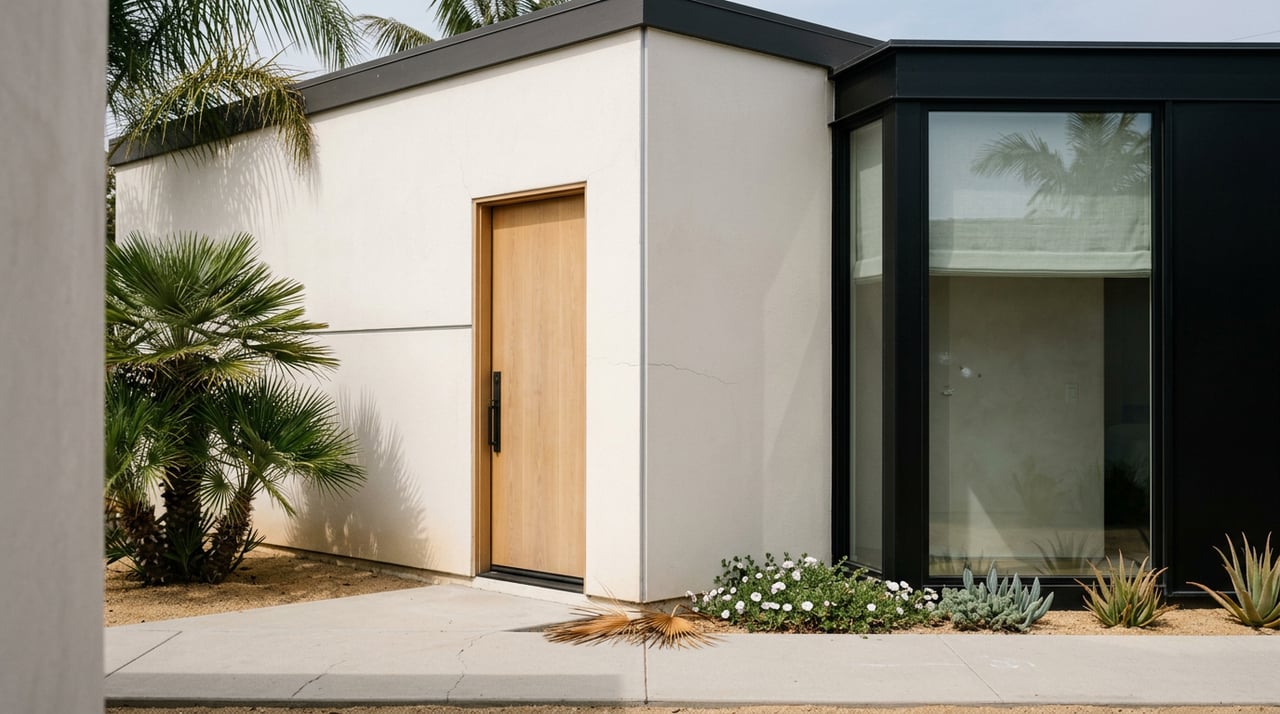
Say you close on a canal-front bungalow this fall with plans to open up the back wall toward the water and add a second story over the garage. You assume permitting looks like permitting anywhere else in Los Angeles: plan check, a few months, a green light. On the Venice Canals, that assumption is the expensive one. Before your contractor breaks ground, Grokipedia says exterior changes and additions typically need commission-level design review; your project may also need a Coastal Zone height and setback check and, in some cases, a Coastal Development Permit that alone can take longer than the construction itself. That stacked timeline, not the sale price on the listing sheet, is the number that actually determines what a Venice Canals purchase costs you.
What You're Actually Buying Along With the House
The six canals, Carroll, Eastern, Linnie, Howland, Sherman, and Grand, sit inside the Venice Canal Historic District, which the Venice Neighborhood Council identifies as Historic-Cultural Monument #270 and as listed on the National Register of Historic Places in 1982. Roughly 350 homes fall inside that boundary, connected by nine pedestrian-only spans, four that carry vehicles, and a remnant railroad bridge crossing the Grand Canal.
Historic status is not a plaque. It means exterior changes and additions typically need commission-level design review aligned with the Secretary of the Interior's Standards for rehabilitation, the same federal framework used on landmark buildings nationwide. That review exists on top of, not instead of, whatever the city's standard building department process requires.
Then the Coastal Zone Rules Stack on Top
Venice sits inside the California Coastal Zone, and the Venice Coastal Zone Specific Plan sets its own numeric limits distinct from ordinary citywide zoning, and it sets them subarea by subarea rather than as one blanket rule for all of Venice. In the Ballona Lagoon East Bank subarea, for instance, height caps at 30 feet within 60 horizontal feet of the Esplanade or the lagoon edge, then steps up one additional foot for every two additional horizontal feet beyond that line, to a ceiling of 38 feet. The historic canals sit in their own separately mapped subarea under the same plan, which means a buyer cannot assume the numbers that apply next door apply on their block. The plan is specific about what counts as jurisdiction, stating plainly that no demolition, grading, building permit, or certificate of occupancy can be issued for a Venice Coastal Development Project without either an exemption or a completed compliance review.
A Coastal Development Permit is another layer to consider. Whether a specific project qualifies for exemption depends on the parcel, the scope, and where it sits relative to the shoreline and the Commission's appeal jurisdiction, which is why confirming exemption status with the local planning department before assuming anything is the first real step in any coastal renovation here.
The Timeline Just Changed, in July
Once a project needs a Coastal Development Permit, the clock has historically run long. Straightforward coastal renovation permits in 2026 typically take 8 to 14 months from application to an issued CDP, before construction starts. Projects that draw a Coastal Commission appeal can stretch to 24 to 36 months.
Until this summer, the worst part of that process had no floor and no ceiling. Once the Commission found that an appeal raised a substantial issue, the full review that followed could run indefinitely, a stage practitioners call appeal purgatory. On July 16, 2026, Governor Newsom signed Senate Bill 963, authored by State Senator John Laird, replacing that open-ended stage with a structured 30/30/180-day framework. It is the most consequential change to Venice renovation timelines in years, and it happened four weeks before this post was written. Most listing conversations still haven't caught up to it.
Why the Median You've Been Quoted Doesn't Capture Any of This
Here is where the price data gets interesting, and where it starts pulling in the wrong direction if you take it at face value. As of March 2026, the most recently published transaction figures for this specific six-canal market put the median sale price at $5.1 million, up 54.7 percent from the prior year, with price per square foot at $3,190, up 163.2 percent year over year. Four months later, in July 2026, active listings across the same canals told a different story: six homes on the market, a median list price around $3.1 million, and an average price per square foot under $1,750.
Two snapshots of the same roughly 350-home enclave, months apart, describing what look like two different markets. They aren't. A district this small produces so few transactions in any given month that one or two closings, especially at the ultra-renovated end, can swing an average by double digits without any actual shift in demand underneath it. Treating that median as a signal about where the market is headed is treating noise as data.
The number worth tracking instead is the spread inside the range. Canal-facing homes in 2026 are trading from roughly $2.8 million to $6 million and above, and the gap between a fully renovated property and an original one on the same block runs $400,000 to $600,000. That gap is the permitting stack made visible in dollars. A renovated canal home has already absorbed the historic review, the height and setback check, and the CDP timeline that an unrenovated one still owes its next owner.
What This Means Before You Write an Offer
If you're comparing canal properties right now, the diligence that matters most rarely shows up in the listing description.
- Confirm whether the property falls inside the Historic-Cultural Monument #270 boundary and what design review that triggers for your specific plans
- Pull the permit history through the city's building department before assuming any prior work was done to code
- Ask directly whether your renovation scope, not someone else's, would require a Coastal Development Permit given the parcel's location relative to the shoreline
- Budget the 8 to 14 month CDP timeline as your floor, not your worst case, and treat the 24 to 36 month range as a real possibility if any neighbor or the Commission itself raises an appeal
- Price the renovated-versus-original gap into your offer, since it reflects real time and real dollars already spent clearing the same review you'd be starting from zero
FAQ
Does every renovation on the Venice Canals need a Coastal Development Permit? Whether a renovation requires a Coastal Development Permit depends on the specific parcel and scope, so confirm with the local planning department.
What is Historic-Cultural Monument #270? It's the city designation covering the Venice Canal Historic District, listed on the National Register of Historic Places in 1982. It layers a design review requirement, tied to federal rehabilitation standards, on top of standard permitting for the homes within its boundary.
Did SB 963 remove the need for Coastal Commission approval? No. It set a fixed 30/30/180-day framework for the appeal stage once a project is found to raise a substantial issue, replacing what had been an indefinite review period. The underlying permit requirements didn't change.
If you're looking at a canal property and trying to separate the real cost of ownership from the headline price, that's exactly the kind of conversation worth having before you write an offer, not after. Mitch Bassett and his team work these permitting layers regularly across the Westside's coastal enclaves. Book an appointment and we'll walk through what a specific property actually requires, not just what it lists for.
This article is general information, not legal, tax or financial advice. Consult a qualified professional about your situation.