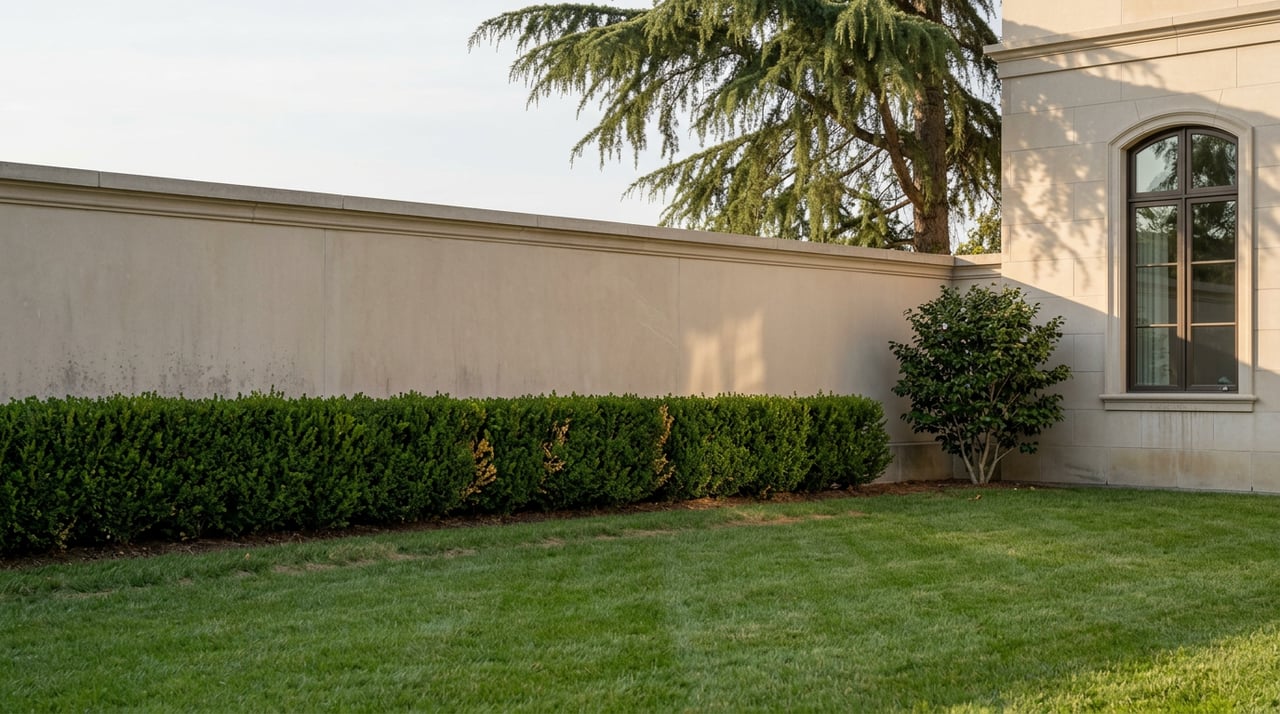
A Colonial Revival mansion on South Beverly Glen Boulevard went up for sale this spring for $16.8 million. It was built in 1932 for Jean Harlow, sold once in 1979 for $1.1 million, and stayed in the same family until this listing. If it closes anywhere near that ask, the seller owes roughly $924,000 in Los Angeles' Measure ULA transfer tax alone, due in full at closing. Add the city's base transfer tax and the county's documentary tax, and the total bill approaches $1.02 million, before commissions, before repair credits, before anyone touches the actual proceeds.
That number is not a footnote. It is the first real decision a Holmby Hills seller has to make in 2026, and it is reshaping how estates in this neighborhood come to market.
The tax bracket every estate here already lives in
Measure ULA's thresholds reset every July 1, adjusted for inflation. As of this year, the city's Office of Finance puts the active brackets at 4 percent on sales between $5.4 million and $10.9 million, and 5.5 percent above $10.9 million. Those numbers matter everywhere in the city. They matter differently in Holmby Hills.
The neighborhood's real estate splits into two markets that rarely touch. The Wilshire corridor condos and the smaller homes tucked along Beverly Glen typically run $1.5 million to $7 million, a band that straddles the lower ULA threshold, so pricing decisions there can genuinely shift a sale from one bracket to another. The core single-family estate market, concentrated north of Sunset Boulevard against the Los Angeles Country Club, trades at $20 million and up, often well past $100 million. There is no pricing your way out of the top bracket at that level. A $20 million estate and a $60 million estate both owe 5.5 percent, full stop.
| Price tier | Typical range | Where it sits on the ULA scale |
|---|---|---|
| Wilshire corridor condos and perimeter homes | $1.5M – $7M | Straddles the $5.4M line, so pricing choices can change the bracket |
| Core single-family estates, north of Sunset | $20M – $100M+ | Sits well inside the 5.5% bracket regardless of final price |
That single fact, that repricing does nothing to change your tax exposure once you are an estate seller here, is why the neighborhood's decades-old habit of trading estates privately has taken on a new function.
Price cuts used to just be price cuts
Holmby Hills has always kept a meaningful share of its biggest transactions off the open market. Brokers with direct relationships to the families involved have moved estates like the Owlwood property on Carolwood Drive, once home to Walt Disney, who ran a backyard miniature railroad there, and the Spelling Manor on Mapleton Drive, for years the largest private residence in Los Angeles, without ever putting them on public display. The Playboy Mansion itself sold for $100 million through channels most buyers never saw. That tradition gets attributed to privacy, and it is partly true. But privacy alone does not explain why the calculus is shifting now.
Consider the Georgian mansion at 10790 Bellagio Road, redesigned inside by Kelly Wearstler and relisted this spring at $34.5 million, down from $37.5 million a year earlier. That $3 million cut is now permanent, public, searchable history. It didn't move the property into a lower tax bracket. It just told every future buyer's agent exactly how much room the seller has already conceded.
Nick Candy's Holmby Hills estate tells the same story at a larger scale. Listed at $85 million back in 2022, pulled, relisted, pulled again, and back on the market this year at $58 million, its four-year price trail is now part of the permanent record on that address. Any agent representing a buyer can pull that history and use it as leverage before the first showing.
A pocket listing does not erase the final sale price. Once a deal closes, the transfer is recorded and the number becomes public through the county, same as any other sale. What a pocket listing avoids is the negotiating history, the multiple asks, the stretch of days on market, the string of price cuts that accumulates when a listing sits publicly for a year. In a neighborhood where 150 to 200-plus days on market is treated as normal rather than a warning sign, because the buyer pool for a $50 million home is genuinely finite, that accumulated public history is exactly the kind of leverage a family with real negotiating room would rather not hand to the other side of the table.
Why the tax cliff changes the incentive, not just the habit
Here is the mechanism that is new. Once a property is listed publicly at a price inside the 5.5 percent bracket, which almost every core Holmby Hills estate is, that tax obligation becomes visible math any buyer's agent can run in seconds. The seller's exposure is no longer private information. It becomes a number the other side can point to directly in a negotiation: you already owe over a million dollars in transfer tax no matter what I offer, so let's talk about splitting the difference.
Research from UCLA has found that Measure ULA has reduced the odds of a property selling above the $5 million threshold by roughly 55 percent in the years since the tax took effect in April 2023, a citywide figure that lands especially hard in a neighborhood where virtually every single-family transaction clears that mark by a wide margin. Sellers here are not necessarily choosing not to sell. Deals above $10 million across Los Angeles rose more than 50 percent year over year in 2025, according to Compass data reported by the Wall Street Journal, so the appetite for high-end transactions clearly exists. What appears to be changing is where those deals get done. A negotiation that happens privately, between a small number of brokers who already know the family and the property, keeps the tax conversation and the price conversation contained. A public listing broadcasts both to every agent in the market simultaneously.
What this means if you're weighing a sale
None of this is tax advice, and anyone this close to a seven-figure transfer tax bill should be working with a CPA who understands real property transactions, not a blog post. But the sequencing matters, and it is worth having in mind before you call anyone:
- Know which bracket your estate sits in before you set an asking price, since a north-of-Sunset property in the $20 million-plus range will not escape the 5.5 percent rate through repricing.
- Understand that once a number goes on the MLS, its full history, including every cut, becomes part of the file on that address indefinitely.
- Ask whether a private, broker-to-broker process could reach a comparable net price without creating that public trail, particularly if your property is one that could plausibly interest the small circle of buyers who transact this way.
- Model your after-tax proceeds under both a public listing scenario and a private one before choosing, since the transfer tax is owed regardless of which path you take and the real variable is what each path does to your negotiating leverage.
Holmby Hills has never been a neighborhood where the median tells you much. The blended figure that shows up on public portals, typically somewhere in the high single millions, reflects the Wilshire corridor and the smaller perimeter homes far more than it reflects the estates that define the neighborhood. What has changed is that the reason to look past that median is no longer just about who lives behind the hedges. It is about what happens to your negotiating position the moment your price and your tax bill become the same publicly visible number.
If you are weighing whether a sale in Holmby Hills belongs on the open market or off it, that is exactly the kind of conversation worth having before a single photo gets taken. Mitch Bassett works this market street by street, with the relationships and the Carolwood network access that make a private process possible when it is the right call. Book an appointment to talk through the numbers on your specific property before you decide which way to go.